 OutdoorStats
Tying Flies With Feathers From the Ducks and Pheasants You Shoot
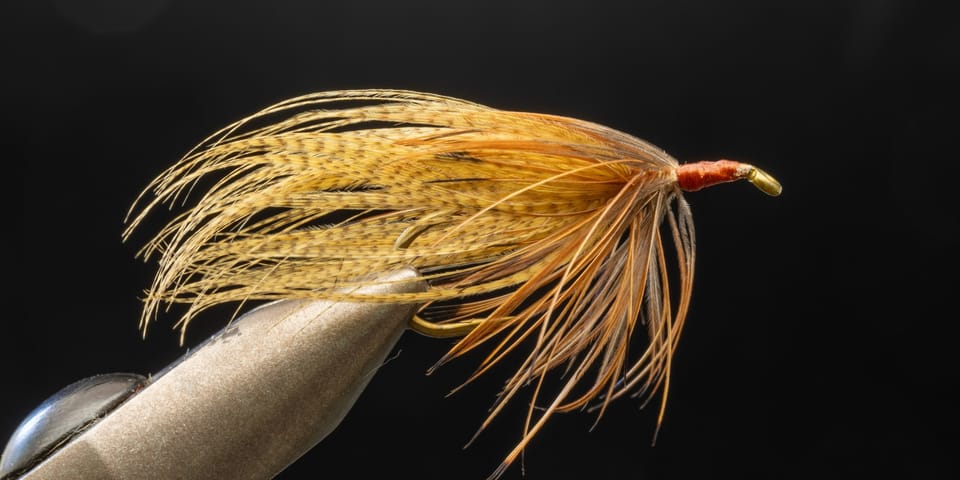
A limit of ducks or a rooster pheasant carries a lot of fly-tying material, and most of it goes out with the carcass. Here is what to keep from each bird, which flies it ties for your own fishing, and how to store it so bugs don't eat it.
What to keep from each bird
Fly shops sell all of these feathers. The ones on your own birds are free.
| Feather | Where on the bird | What it ties |
|---|---|---|
| CDC (any duck) | Around the preen gland, on top of the rump | CDC dry flies, emergers, soft-hackle collars |
| Mallard flank (drake) | Sides, under the folded wing | Tails and wings on dry flies; dyed, a wood duck substitute |
| Mallard bronze (drake) | Shoulder, above the speculum | Wings on wet flies like the Mallard and Claret |
| Teal flank (drake) | Sides | Wings on the Teal and Red and the Peter Ross |
| Wood duck flank (drake) | Sides | Upright wings on Catskill dry flies |
| Goose biots | Leading edge of the primary wing feathers | Prince Nymph tail and "horns," stonefly tails, biot bodies |
| Pheasant tail (rooster) | The long center tail feathers | The Pheasant Tail Nymph |
| Pheasant rump (rooster) | Lower back, above the tail | Soft-hackle collars |
| Pheasant neck and back (rooster) | Upper back and neck | Wing cases on nymphs |
CDC: the one feather every duck has
CDC is short for cul de canard, French for "duck's bottom." The feathers sit around the preen gland at the base of the tail. Every duck has them, so a gadwall or a wigeon is as useful here as a mallard.
The preen oil helps, but most of the float comes from the feather's structure. The barbs are lined with fine, kinked barbules that hold tiny bubbles of air. That's also why gel floatants ruin CDC: they mat the fibers and the air has nowhere to sit. Treat CDC flies with powder desiccant instead.
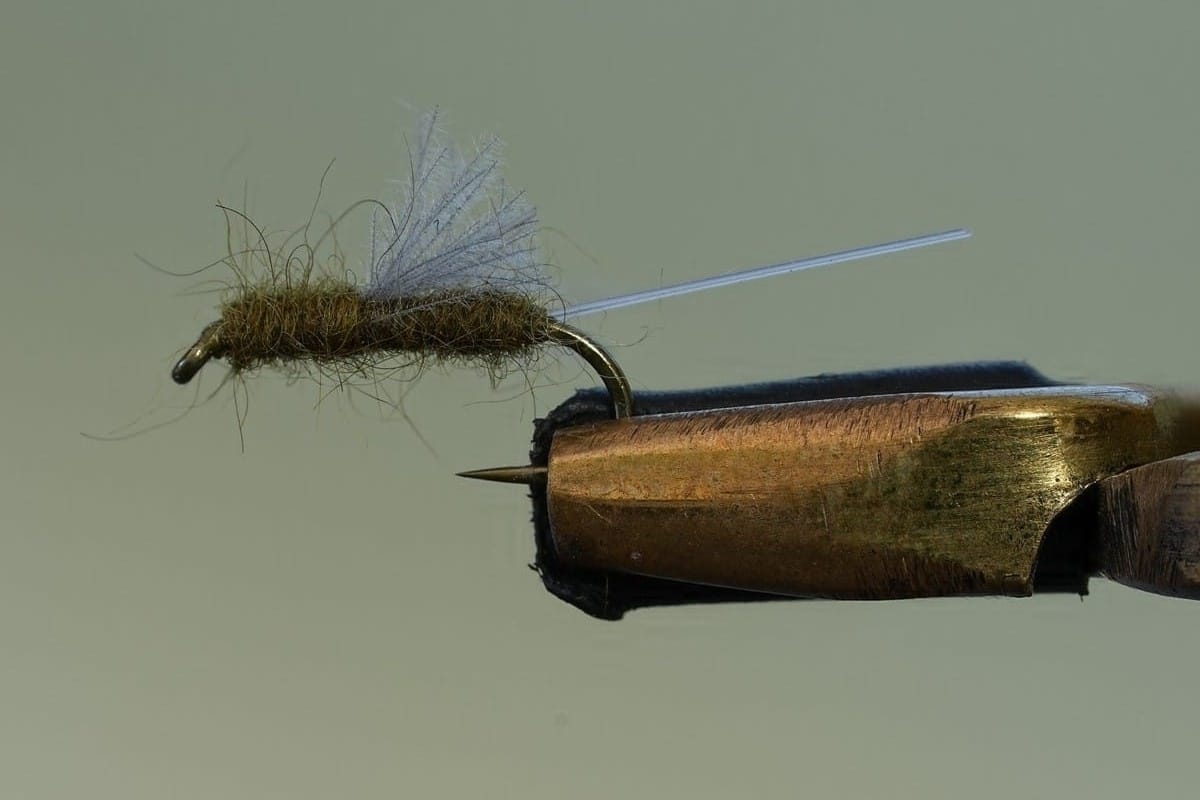
Flank feathers: mallard, teal and wood duck
Drake flank feathers are the barred feathers along the bird's sides. Wood duck flank is the classic wing on Catskill dry flies like the Light Cahill and Hendrickson. Each drake carries only a handful of the good ones, which is why a pack of it costs what it does. Mallard flank dyed to wood-duck color is the usual substitute.
Teal flank has bolder black-and-white bars. It makes the wing on old Scottish wet flies like the Teal and Red and its variant, the Peter Ross. The bronze feathers on a mallard's shoulder make the wing on the Mallard and Claret, an Irish lake pattern.
Mergansers are ducks too, and their feathers tie soft hackles like the one below.
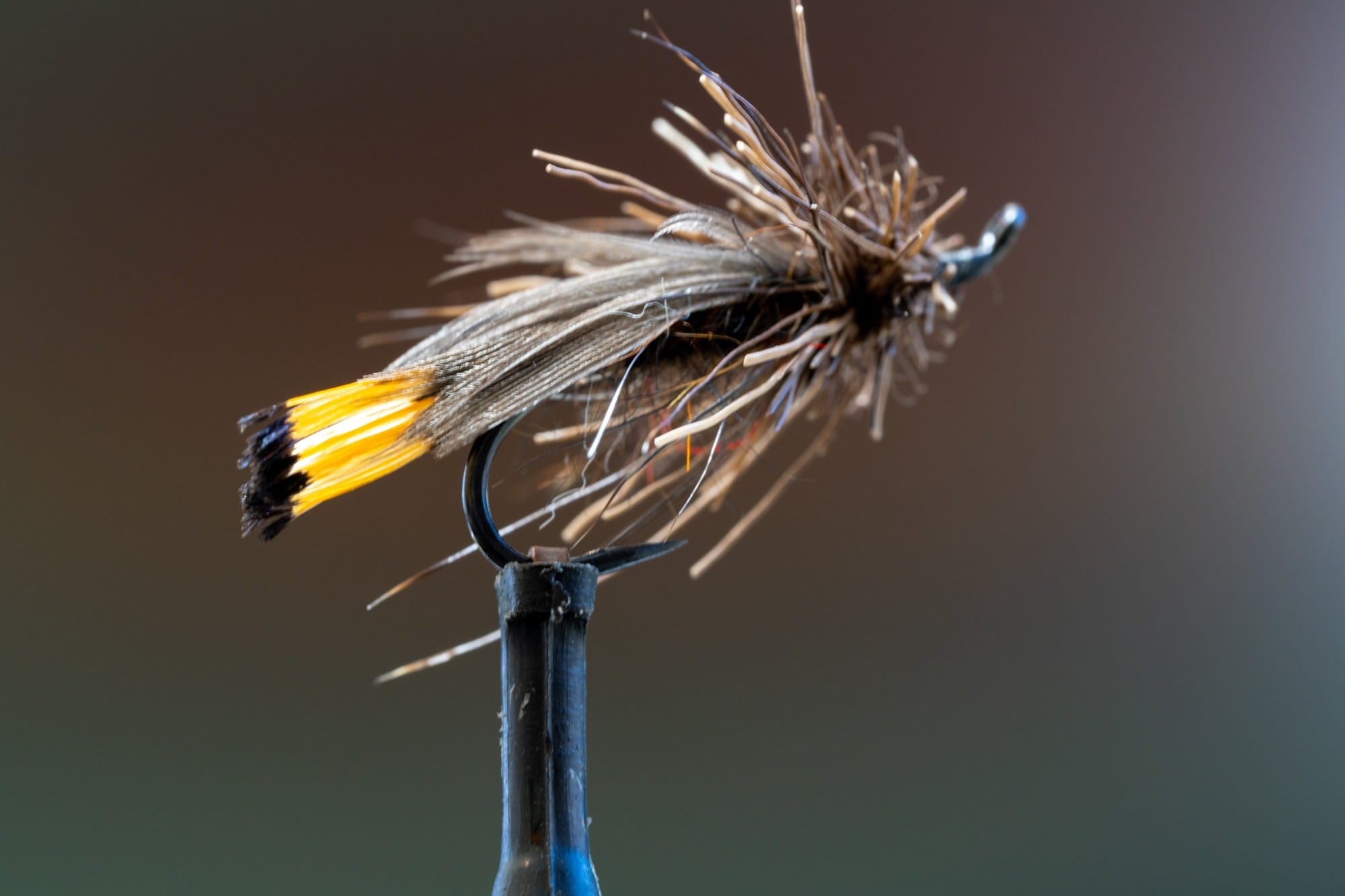
Goose biots
Biots are the short, stiff fibers on the leading edge of a goose's primary wing feathers. They make tails and antennae on stonefly nymphs and smooth, segmented bodies on small dry flies. The Prince Nymph, popularized by Oakland tier Doug Prince in the 1940s, uses brown biots for its forked tail and white biots for its "horns."
Pheasant tail, rump and neck
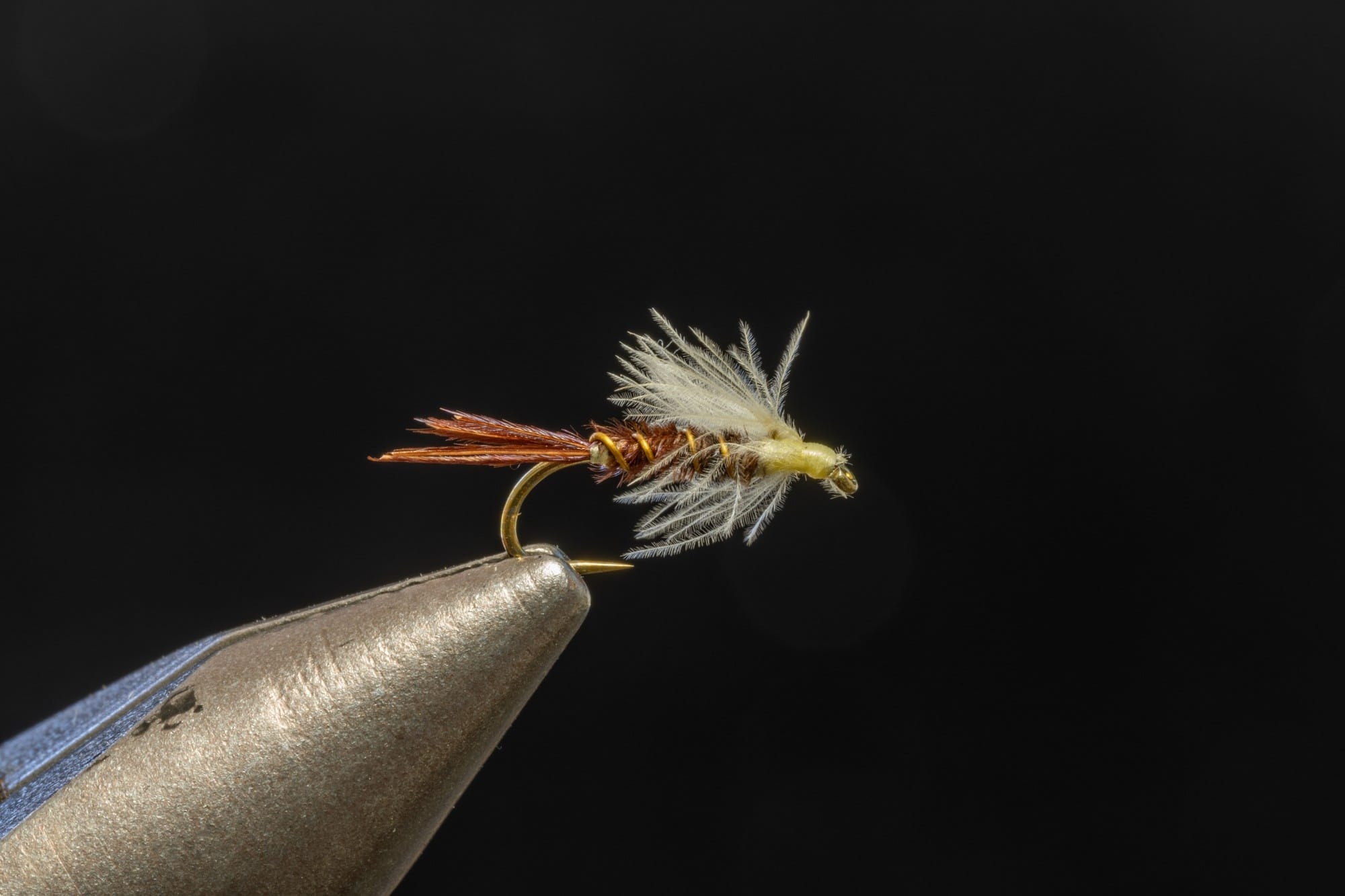
The Pheasant Tail Nymph is one of the most widely fished nymphs. Frank Sawyer, a river keeper on England's Wiltshire Avon, tied his with nothing but pheasant tail fibers and fine copper wire, no thread. Al Troth's American version adds a peacock herl thorax and legs made from the fiber tips. A single rooster's center tail feathers tie a lot of them.
Rump feathers from the lower back are soft and mottled, good for soft-hackle collars. Small neck and back feathers make wing cases on nymphs.
How to pull, clean and store them
Wait until you're home. Federal and California rules both require a fully feathered wing or the head to stay on each bird until it reaches your home or a processor (50 CFR 20.43; 14 CCR 251.7). Pulling a few tail feathers in the truck doesn't break that rule, but skinning a wing in the field does.
Pull CDC and flank first. Pluck CDC by hand from around the preen gland before the bird gets wet or bloody. Pull flank feathers one at a time, or cut out a patch of skin if you want them in rows. On a pheasant, pull the center tail feathers and skin out the rump and back if you want those.
Clean only what's dirty. Clean, dry feathers can go straight into a bag. Bloody or muddy ones can be washed in lukewarm water with a little dish soap, rinsed and dried on a towel or with a hair dryer on low.
Dry any skin. Scrape off fat and meat, rub borax into the flesh side and let it dry flat in a warm, dry spot. Leftover fat goes rancid and draws bugs.
Freeze before storing. Dermestid beetle larvae and clothes moths eat untanned skins and feathers, and a single infested patch can spread through a tying bench. Seal new material in a bag and freeze it for about a week. The National Park Service's museum guidance calls for 6 to 10 days at −20°C (−4°F) for most pests (Conserve O Gram 3/6). A chest freezer gets closer to that than a self-defrosting kitchen freezer.
Store sealed and check. Keep materials in sealed bags or tight bins, labeled by bird and date. Look them over a few times a year. Fine powder in the bottom of a bag, or bare quills, means bugs. Freeze that bag again and look at everything near it.
A short note on selling
Tying flies from your own birds for your own fishing, or giving them to friends, is fine. Selling them is a different question, and the answer depends on the bird:
- Ducks and geese: federal law allows selling the feathers of lawfully hunted waterfowl "for the making of fishing flies," though not for millinery or ornamental use (50 CFR 20.91). California's Fish and Game Code bars selling any part of a game bird (§§22, 3504, 3039) and has no waterfowl feather exception of its own. CDFW's "California Outdoors" Q&A column has given conflicting answers: no in November 2012, citing §§3039 and 3504, and yes in January 2018, citing 20.91.
- Doves, coots, snipe and other migratory game birds: the federal feather rule covers only waterfowl, and the Migratory Bird Treaty Act bars selling any part of a migratory bird otherwise (16 U.S.C. 703).
- Pheasants: they aren't migratory birds under federal law, which covers only native species (16 U.S.C. 703(b)). California's ban on selling game birds applies to wild pheasants; parts of farm-raised game birds may be sold (§3039(c)).
Selling across state lines in violation of a state's law is also a federal offense under the Lacey Act (16 U.S.C. 3372). If you want to sell flies tied with feathers from birds you shot, get CDFW's answer in writing first.
Not legal advice. This summarizes the federal and California rules as of October 25, 2026. Rules change, and other states have their own.
Takeaways
- Save the CDC from every duck. It's the most useful feather on the bird and the easiest to lose once the bird is wet.
- Drakes are worth more than hens. Mallard, teal and wood duck flank, plus mallard bronze, all come from drakes in winter plumage.
- One rooster ties a lot of Pheasant Tail Nymphs. Keep the center tails, and the rump and neck if you'll use them.
- Freeze everything before it joins your materials. About a week, sealed, as cold as your freezer goes.
- Tie for your own box. Using feathers from your own birds in your own flies is fine. Selling them is a separate question; get CDFW's answer in writing first.
New to the birds themselves? Start with how to go duck hunting in California and how to get on a wildlife area. For roosters, see what 75 years of state surveys say about pheasant hunting in California, Oregon and Washington.
Sources: 50 CFR 10.12, 10.13, 20.11, 20.43 and 20.91 (eCFR, current as of October 22, 2026); 16 U.S.C. 703, 708 and 3372; California Fish and Game Code §§22, 3039, 3500 and 3504; 14 CCR 251.7 and 509; CDFW "California Outdoors" Q&A columns (November 29, 2012, and January 26, 2018); National Park Service Conserve O Gram 3/6. Pattern recipes checked against published versions (Fly Fisherman, Orvis) and the histories of the Pheasant Tail and Prince nymphs. This is general information, not legal advice. Check current rules with CDFW and the U.S. Fish and Wildlife Service before selling anything made from wild birds.