 Outdoor Stats
How to Get on a California Wildlife Area
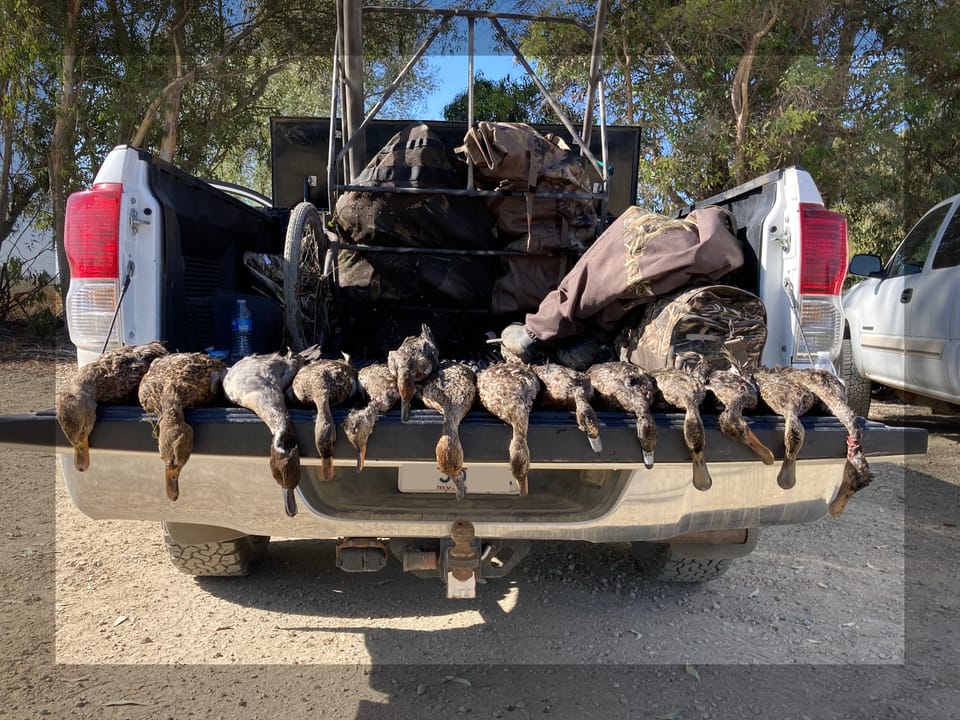
You've got your license, your validations, your hunting pass. You know where the wildlife area is. Now the hard part: actually getting on.
California's Type A wildlife areas — the ones with managed habitat and the best-known hunting — run on controlled access. The wildlife area has a capacity limit, kind of like a nightclub with a fire code. Only so many hunters can be out there at once, and there's a system for deciding who gets on and in what order.
There are three ways in: reservations, the lottery, and the sweat line. Understanding how they work — and how they interact — is the difference between a good season and a frustrating one.
Reservations
Reservations are the gold standard. A reservation guarantees you a spot on the wildlife area for a specific day. No ambiguity, no waiting around — you're in.
How it works
At least 17 days before your target hunt date, you submit a reservation application through CDFW's Automated License Data System. You can apply online at ca.wildlifelicense.com or at any license agent. It costs $1.34 per hunt choice. You pick the wildlife area and the date, pay the fee, and wait.
It's a draw. CDFW pulls names to fill the available slots. If the wildlife area can hold 200 hunters and each reservation covers a party of up to two adult hunters (plus junior hunters or non-shooters), they'll draw enough reservations to fill capacity.
If you're drawn, you'll get a reservation letter by mail and an email notification with your reservation number. That number is everything.
Why the number matters
Your reservation number determines your entry order — when you get to check in and, effectively, which spots are still available when you do.
- Reservation #1: You're the first person on the wildlife area. Every pond, every blind, every spot is open. If you know the area, you go straight to the best spot.
- Reservation #20: Still excellent. Plenty of good spots left.
- Reservation #80: You're guaranteed on, but you're picking from what's left. The prime spots are taken.
- Reservation #100: You're the last one in. You have a spot, but it's dealer's choice at that point.
A low reservation number on a good day is the best-case scenario in California duck hunting. You know you're hunting, you know you're early, and you can plan around it.
Don't miss your window
Reservations are processed at the check station in numerical order, starting roughly 2 to 2.5 hours before shooting time. If you don't show up when your number is called, your reservation expires — typically 1.5 hours before shoot time. After that, you lose your priority and your spot goes to the next person in line. Be early.
The math on odds
Reservation odds aren't great at popular areas. A big-name wildlife area on a Saturday might get several hundred applications for 100 slots. Midweek days have better odds — fewer people requesting Wednesdays — which is another reason Wednesday is the move.
CDFW publishes reservation drawing statistics at wildlife.ca.gov/Licensing/Statistics/Waterfowl-Reservations. We'll break those numbers down by area and day of week in a future post.
For now, just know that you should be submitting reservations consistently. Put in for every day you'd be willing to hunt. At $1.34 per choice, it's the cheapest lottery ticket in outdoor recreation.
Applying smart
You can submit a season-long reservation application (covering every shoot day at your chosen areas) or a multiple-choice reservation application (picking specific dates). You're limited to one application per wildlife area per shoot day — duplicates get disqualified.
Apply online and double-check your choices before submitting. The fee is non-refundable, even if the area closes due to flooding or your application has an error.
The lottery
Didn't get a reservation? The lottery is your next shot.
How it works
The evening before a hunt day, you show up at the wildlife area and enter the lottery. At most areas, entries are accepted from roughly 6:00 to 8:00 PM, with the draw conducted at 8:00 PM. Your name goes in, numbers are pulled, and you get a lottery number. Only one person per party needs to be present to enter.
New for the 2025–26 season: CDFW says lottery results will be available online at ca.wildlifelicense.com and on the CDFW License App, so you may not have to stick around for the draw at every area. Worth checking whether your area has adopted this yet.
Lottery numbers stack after reservations. So if 100 reservations were drawn, Lottery #1 becomes effectively position #101 in the overall entry order.
Will you get on?
Almost always, some reservation holders don't show up. Maybe they got two reservations and are skipping their bad number. Maybe the weather's terrible and they'd rather stay home. Maybe they only brought one person on a two-person reservation.
That means Lottery #1 will almost always get on. Even Lottery #10 or #20 has a strong shot at most wildlife areas. The further down the list you go, the less certain it becomes.
At a busy area like Yolo Bypass on a Saturday, Lottery #200 is probably not getting on. But Lottery #20? You're likely hunting that day — just with a later start and fewer spots to choose from. You might get on right before or even after shoot time, which means hustling to set up while birds are already flying.
The catch
You have to commit the time. You're driving to the wildlife area that evening, waiting for the 8 PM draw, and then either sleeping in your truck or driving home and coming back at 3 AM. If your number is bad, you've burned an evening. It's part of the game.
Exceptions worth knowing
Not every wildlife area runs the lottery the same way:
Yolo Bypass posts lottery results online, so you can check your number remotely and decide whether to make the early-morning drive based on where you landed.
Grizzly Island has historically used a parking line system — wherever you park your truck, that's your number. Reservations line up first, then lottery participants. It's purely first-come, first-served within each group.
Procedures can change season to season. Always check with the specific wildlife area before heading out — contact info is in the CDFW Waterfowl Newsletter.
The sweat line
No reservation. Bad lottery number, or didn't make it into the lottery at all. You've still got one option: the sweat line. CDFW calls it first-come, first-served or refill. Hunters call it the sweat line.
How it works
After all reservations have been called and the lottery list is exhausted, the wildlife area switches to first come, first served. You put your name on a list and you wait.
The wildlife area is at capacity. Hunters are out in the field. You're sitting in the parking lot. That's the sweat line.
Why it's called the sweat line
Because you're sweating. You have no idea if you're getting on.
Hunters leave the wildlife area throughout the day — some finish by mid-morning, some have to get to work, some just aren't seeing birds. Every time a hunter checks out at the check station, a spot opens up, and the next person on the sweat line gets called in.
If you're #5 on the sweat line, you're probably fine. People trickle out steadily through the morning, and you'll likely get on before noon.
If you're #150 on the sweat line on closing weekend at Yolo? The entire wildlife area would have to turn over multiple times for you to get on. You're probably not hunting that day.
Lottery carryover
At many wildlife areas, lottery numbers that weren't reached before the cutoff get rolled into the front of the sweat line. So if you put your name in for the lottery the night before and got a high number that never got called, you still have priority over someone who just showed up for the sweat line that morning.
This is a good reason to always enter the lottery, even if you think the odds are long. Worst case, you get front-of-line sweat line position.
Details on lottery carryover vary by area — confirm the specific rules at the check station.
Making the most of it
The sweat line isn't a waste of time if you go in with the right expectations. Bring breakfast, bring coffee, hang out in the parking lot, talk to other hunters. Some of the best conversations in duck hunting happen on the sweat line. If you get on, great. If not, you spent a morning outdoors with people who share the obsession.
How the three systems interact
Here's the full sequence for a typical hunt day at a Type A wildlife area:
| Order | System | How you get a number | Guaranteed spot? |
|---|---|---|---|
| 1st | Reservations | Drawn at least 17 days in advance ($1.34/choice) | Yes |
| 2nd | Lottery | Entered in person the evening before, drawn at 8 PM | No, but low numbers likely get on |
| 3rd | Sweat line (refill) | First come, first served day-of | No — depends on turnover |
Reservation holders enter first, in number order. Then lottery numbers, in order. Then sweat line, in order. It's a three-tier queue.
At a well-managed wildlife area on a normal hunt day, here's roughly how it shakes out:
- Reservations fill maybe 60–80% of capacity
- Lottery numbers cover the remaining spots plus no-shows
- Sweat line picks up the rest as hunters leave throughout the day
On a quiet Wednesday, you might walk right on with a decent lottery number. On a Saturday in January, the sweat line might never move. Know the rhythm of the area you're hunting and plan accordingly.
Strategy for new hunters
- Submit reservations for every day you'd hunt. Wednesdays have better odds than weekends. Even if you get a high number, you're guaranteed on.
- Always enter the lottery. Even if you think it's a long shot, you get sweat line priority as a fallback. The drive is the same either way.
- Start with midweek hunts. Less competition at every stage — better reservation odds, lower lottery numbers, shorter sweat lines. And as we've shown, Wednesday harvest rates match Saturday with 42% fewer hunters.
- Learn one wildlife area well. Every area has its own quirks — specific lottery procedures, how the sweat line is managed, which ponds produce. Pick one, go often, and learn the system before branching out.
- Talk to people. The check station parking lot is full of hunters who've been running this system for decades. Ask questions. Most people are happy to help someone new figure it out.
Bottom line
The access system is the most confusing part of California duck hunting, and it's the reason a lot of people never start. But once you understand the three tiers — reservations, lottery, sweat line — it becomes predictable. Not easy, but predictable.
Put in your reservations. Show up for the lottery. Be willing to sit the sweat line. Do that consistently and you'll hunt plenty of days.
Access procedures can vary by wildlife area and change between seasons. CDFW publishes a Waterfowl Reservation Information table with area-specific check-in times, lottery procedures, and refill rules — check it throughout the season. This guide reflects general practices across California's Type A public wildlife areas as of the 2025–26 season.