 OutdoorStats
The Quail Soft Hackle: A Size 18 Olive With a Valley Quail Collar
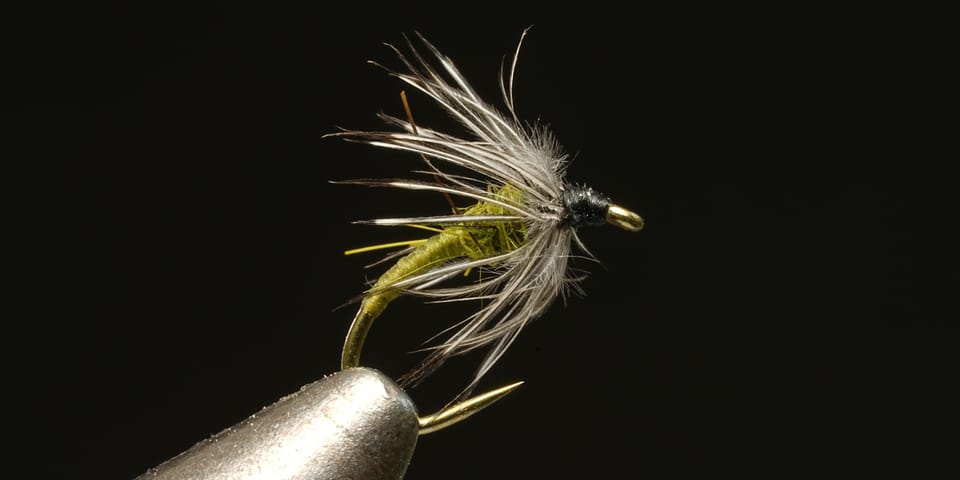
This is a size 18 soft hackle: a slim olive body, a little olive dubbing behind the head, and a sparse collar of California valley quail neck feathers.
What it imitates
Small and olive, it's a Blue-Winged Olive: a Baetis mayfly, the little olive mayfly that hatches on trout rivers through the cool months. Baetis nymphs are swimmers. They live in the rocks and weeds and dart around in quick bursts instead of crawling. To hatch, a nymph swims up to the surface, and the adult splits its skin and climbs out in the film. The best hatches often come on gray, drizzly days in fall and spring.
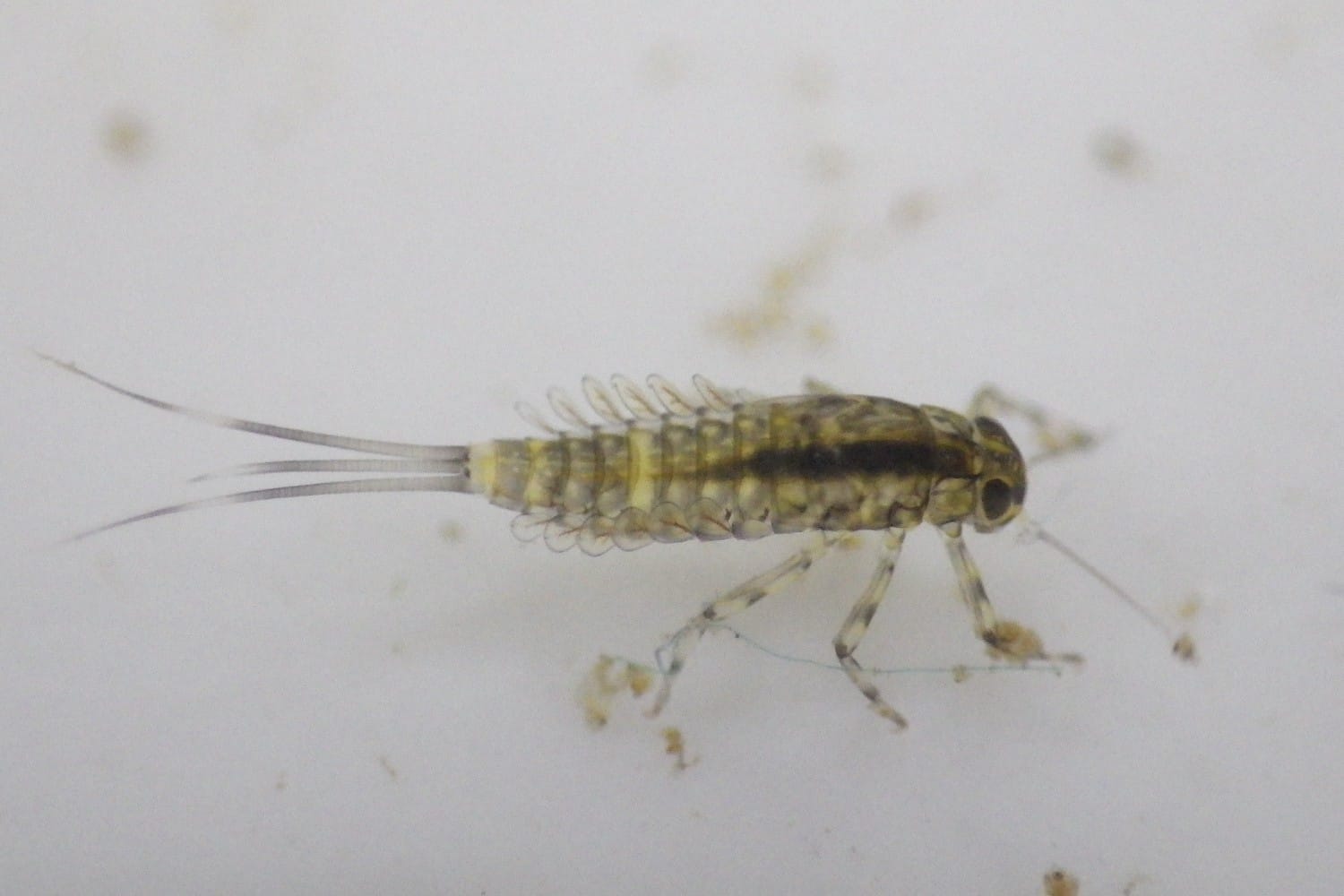
A soft hackle is fished for that trip to the surface. The soft fibers fold back along the body and pulse in the current like kicking legs, and the slim body reads as the nymph. Cast across, let it sink and swing, and when the line straightens below you the fly rises toward the top the way a hatching nymph does. That's where most takes come.
Where the quail goes
The collar is valley quail, wrapped behind the head so the fibers sweep back over the body. Each fiber is banded white and gray along its length, and on a hook this small the bands read as segmented legs, like the ones on the nymph above.
These are the tiny feathers from up by the neck. Their size is the point: most game-bird hackle is too long for a size 18, and the quail's neck feathers are short enough to fit. One bird has plenty of them. For what else to keep from a bird, see tying flies with feathers from the ducks and pheasants you shoot.
The rest of the fly
The body is a slim olive abdomen with a pinch of olive dubbing for the thorax and a small black head. Keep it all sparse: the real nymph is thin, and a bushy fly looks wrong at this size.
How to fish it
Use a light rod and 5X or 6X tippet. Swing it through riffles and the seams below them: cast across and a little downstream, keep the line tight, and let the fly hang a few seconds at the end of the swing before you recast. When olives are on the water, tie it 18 inches behind a small dry fly so it rides just under the surface, where the emerging nymphs are. Gray, drizzly afternoons in fall and spring are the best times.